Real HVAC Project Examples
AC Replacement Examples in St. George, UT
These are real AC replacement projects Bret completed for homeowners in St. George. Different homes, different situations, same approach: assess honestly, recommend practically, install cleanly, and explain everything.
_e75594f8.webp)
A new Goodman condenser set cleanly on a concrete pad, one of three AC replacement projects shown on this page.
Project Overview
Service
AC Condenser Replacement
Location
St. George, UT
Projects Shown
3 separate residential replacements
Equipment Visible
Goodman outdoor condensers
Home Types
Single-family residences
Common Situation
Aging or failed outdoor AC equipment
Why AC Replacement Matters in Southern Utah
St. George is one of the hardest climates in the country on residential cooling equipment. Summer temperatures regularly exceed 110°F, and the cooling season stretches from April through October, sometimes longer. That means outdoor condensers in this area run at near-maximum capacity for five to six months straight, year after year.
This sustained thermal load accelerates every failure mode in an AC system. Compressor windings degrade faster under constant high-amperage draw. Capacitors dry out from heat exposure. Contactor points pit and arc. Fan motors lose bearing lubrication. Refrigerant connections develop micro-leaks as thermal cycling expands and contracts fittings thousands of times per season.
The result: AC systems in St. George often reach end-of-life at 12 to 15 years, well short of the 18 to 20 years that manufacturers advertise based on milder climates. When a system crosses that threshold, homeowners face a decision that deserves careful thought rather than a high-pressure sales pitch.
These three projects represent that decision point. In each case, Bret evaluated the existing equipment, discussed the homeowner's options honestly, and completed a clean condenser replacement when replacement was the practical path forward.
How Bret Evaluates an AC System
Before recommending replacement, Bret looks at whether the existing system still has useful life. Not every old system needs to be replaced, and not every repair is worth doing. The goal is to help the homeowner make a practical decision, not to sell the biggest system or the most expensive option.
The assessment starts with the basics: system age, refrigerant type, visible condition of the condenser coil and cabinet, compressor sound and amp draw, capacitor readings, and contactor condition. Bret also looks at the installation quality of the existing system, how the line set is routed, whether the pad is level, and whether the electrical connections are clean.
From there, the conversation turns to repair history. A system that has needed two or three significant repairs in the last few seasons is telling you something. Each repair buys time, but at some point the cumulative cost of continuing to patch an aging system exceeds the cost of starting fresh with reliable equipment.
Refrigerant type matters too. Systems running R-22 (Freon) face a practical ceiling: the refrigerant is no longer manufactured, prices have climbed dramatically, and any future leak means another expensive recharge with increasingly scarce material. For R-22 systems with compressor or coil failures, replacement is almost always the more practical path.
A good HVAC recommendation should make sense to the homeowner before they spend thousands. If Bret cannot explain clearly why replacement is the better option, he will not push it.
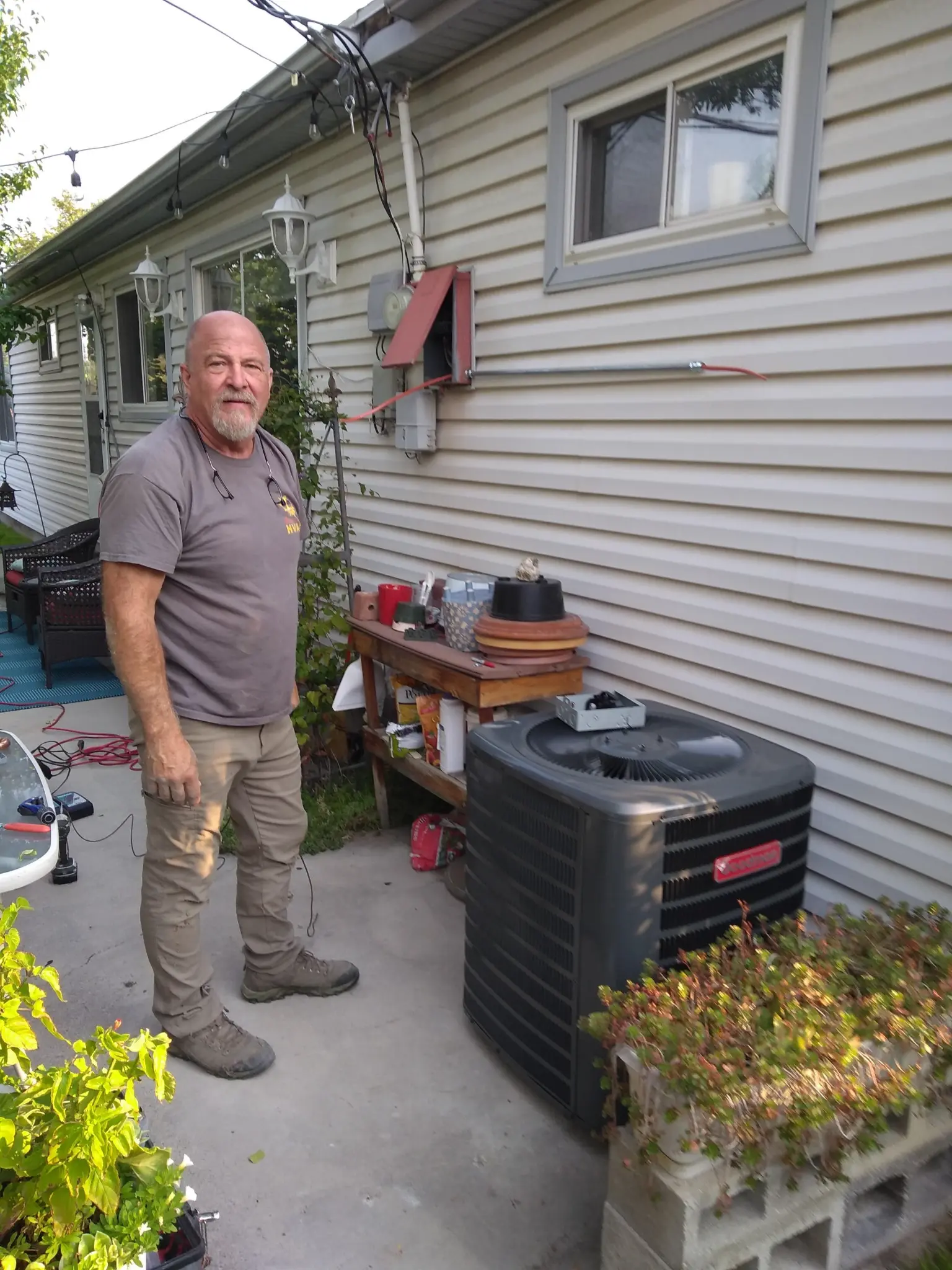
Bret on-site evaluating an existing outdoor condenser before recommending next steps.
The Homeowner's Situation
These projects represent a common situation Bret sees in St. George homes: an outdoor condenser that has reached the end of its practical service life. The homeowner notices the system is not cooling like it used to, running longer cycles, tripping breakers, or making sounds it did not make before.
In some cases, the system has already had one or two repairs in recent seasons. In others, a single catastrophic failure, usually the compressor, makes the repair-vs-replace math clear. Either way, the homeowner needs someone who will look at the actual situation and give a straight answer about what makes sense.
That is what these visits started with: Bret showing up, looking at the equipment, and having an honest conversation about the options.
What Determines Whether Repair or Replacement Makes Sense
The repair-or-replace decision is not as simple as "if it's old, replace it." Bret weighs multiple factors together, because no single data point tells the whole story:
Compressor Health
The compressor is the most expensive component. If amp draw is elevated, the system is slugging liquid, or windings show resistance drift, the compressor is signaling end-of-life. Replacing a compressor on an old system often costs 60-70% of a full replacement, with no guarantee the rest of the system will not fail next.
Refrigerant Type & Charge
R-22 systems face a hard economic ceiling. R-410A systems with chronic low charge usually have a leak that will recur. Bret checks subcooling and superheat to assess whether the charge is correct and whether the system is operating within design parameters.
Repair History Pattern
A single repair on a 10-year-old system is normal maintenance. Two or three repairs in 18 months suggests cascading failures, one component failure stresses others. At that point, each repair is buying less time than the last one did.
Installation Quality
Some systems fail early because they were installed poorly, undersized line sets, improper charge, bad airflow, unlevel pads. When Bret sees installation defects on the existing system, he corrects them during replacement so the new equipment starts with a proper foundation.
Work Performed
For each of these AC replacement projects, the scope of work followed a similar pattern. Bret handles every step personally, from initial assessment through final testing.
Evaluated the existing outdoor cooling equipment and overall system condition
Discussed repair vs. replacement options honestly with the homeowner
Removed aging condenser equipment where replacement was the practical path forward
Set the new Goodman condenser cleanly on a level pad
Connected the new equipment to the existing refrigerant lines and electrical
Pulled vacuum on the line set to remove moisture and non-condensables
Released factory refrigerant charge and verified subcooling within specification
Tested system operation through a full cooling cycle
Verified temperature split across the evaporator (supply vs. return air)
Cleaned the work area and removed all old equipment
Walked the homeowner through the new system and answered questions
Clean Installation, Proper Foundation
A condenser replacement is not just about swapping one box for another. How the equipment is set, connected, and commissioned determines whether it will perform efficiently for the next 12 to 15 years or start degrading early.
Bret pays attention to the details that matter: the pad needs to be level so the compressor oil distributes evenly. The line set connections need to be properly torqued and leak-checked. The system needs a proper vacuum pull to remove moisture, moisture in a refrigerant circuit causes acid formation that destroys compressor windings from the inside.
These are not optional steps. They are the difference between a system that runs reliably and one that develops problems within a few seasons.
_86602cc4.webp)
A completed condenser replacement, new equipment set on a proper pad with insulated line set connections.
The Outcome
In each of these three projects, the homeowner ended up with newer, more reliable outdoor cooling equipment, properly sized for their home, cleanly installed, and tested through a full operating cycle before Bret left the property.
More importantly, each homeowner understood why replacement made sense for their specific situation. They were not pressured into it. They were not sold on features they did not need. They got a clear explanation, a fair price, and a finished installation that Bret could stand behind.
That is the standard for every AC replacement Bret does in St. George: the homeowner should understand the decision, trust the recommendation, and have equipment that performs reliably through Southern Utah's demanding cooling seasons.
What Homeowners Can Learn From These Projects
AC replacement should start with a real assessment, not a sales pitch. If someone is quoting you a price before looking at your system, they are selling, not diagnosing.
Repeated repairs on an aging system can eventually cost more than replacement. Each repair buys time, but the intervals between failures tend to shorten as components wear together.
Southern Utah heat is genuinely hard on cooling equipment. Systems here work harder and wear faster than in milder climates. A 12 to 15 year lifespan is realistic, not a failure.
The brand of equipment matters less than the quality of installation. A properly installed mid-range condenser will outperform a premium unit that was rushed into place without proper vacuum, charge verification, or leveling.
You deserve to understand the recommendation before spending thousands. If your HVAC contractor cannot explain clearly why replacement is the better option, get a second opinion.
What Customers Say About Working With Bret
Not every review is tied to a specific project photo, but these real customer reviews show the kind of experience Bret provides: straight answers, professional work, and no-pressure guidance.
"Bret installed a new furnace and air conditioner for us. Explained everything. Very honest. Gave me a price that was at least 25% less than the big HVAC companies. Saved us thousands."
"Bret was amazing! He came out last minute when our AC went out on a hot August Friday afternoon in order to prevent us having to spend the weekend without AC. He was super honest with his recommendations and didn't try to upsell things we didn't need. Others I called did, unfortunately. His prices were also better."
"This was the best and most honest company we've had work on our furnace and A/C. Great service and pricing. He was great to work with and is such an honest, experienced person in his trade."
AC Replacement Pricing in St. George
AC replacement cost depends on the home, equipment size, efficiency rating, access difficulty, existing system condition, and whether additional work (line set, electrical, indoor coil) is needed. Bret uses ballpark starting points to help homeowners understand the range:
AC condenser replacement generally starts around $4,000 and up for a straightforward swap. A combined AC and furnace replacement often starts around $7,500. These are planning numbers, not quotes. The actual price depends on what Bret finds when he looks at your specific situation.
Bret will not treat ballpark numbers like a final quote without looking at the actual situation. For detailed pricing information and what affects cost, see the AC Replacement service page.
Frequently Asked Questions
Related Services
AC Replacement in St. George
Full service page with pricing, process, and what to expect from an AC replacement.
Learn moreAir Conditioning Repair
When repair makes more sense than replacement, diagnosis, common issues, and fair pricing.
Learn moreMini-Split Installation
Ductless cooling and heating for garages, casitas, additions, and rooms that never stay comfortable.
Learn more