LaVerkin is a small community of about 4,500 people that sits along SR-9 between St. George and Hurricane, just south of the Virgin River. It is quieter and more rural than its neighbors, no big-box retail, no major subdivisions going up every month. The homes here tend to be older, on larger lots, and many of them still have original HVAC equipment from the 1990s or earlier.
That older equipment is reaching the end of its useful life. LaVerkin homeowners dealing with aging AC systems that cannot keep up with summer heat, furnaces that run inconsistently through winter, or detached shops and outbuildings that have never had proper climate control come to Bret for a straight answer. The drive from St. George is about 15 minutes, and Bret treats LaVerkin jobs the same as any other local project.
What Bret Installs in LaVerkin Homes
Mini-Split Installation
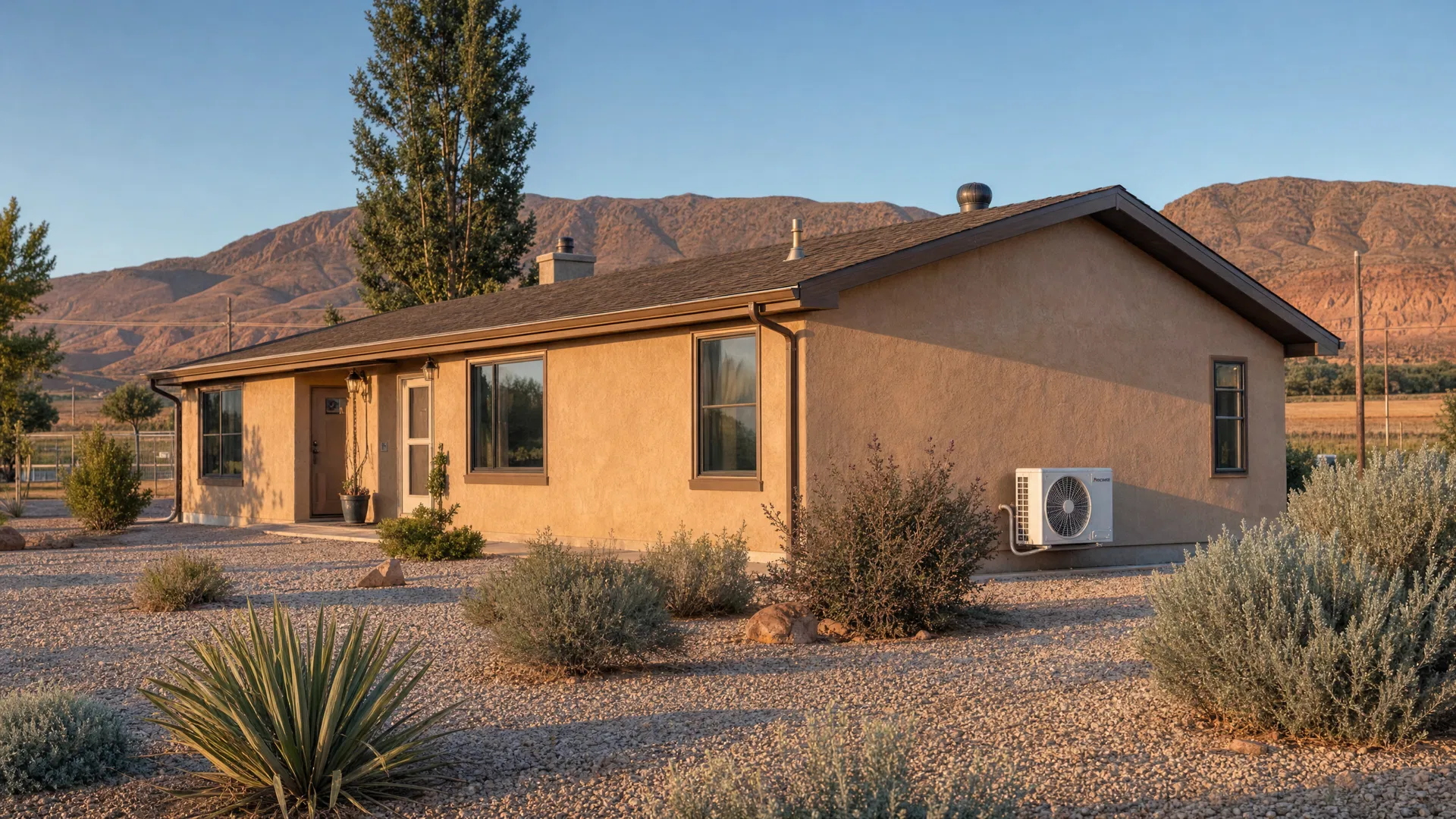
LaVerkin's larger lots mean a lot of detached workshops, sheds, and outbuildings that were never connected to the home's main HVAC system. A single-zone mini-split is the cleanest way to make those spaces comfortable year-round without running ductwork across the property. Bret installs Daikin mini-splits in LaVerkin shops and outbuildings regularly.
AC Replacement
LaVerkin gets the same desert heat as Hurricane and St. George, summer highs regularly exceed 105°F. Many LaVerkin homes still have original AC systems from the late 1990s or early 2000s that are well past their rated lifespan. When a system is running constantly, cycling on and off, or simply not keeping up, Bret can assess whether replacement makes more sense than another repair.
Furnace Replacement
LaVerkin winters are mild compared to northern Utah, but cold nights from November through February are common, lows in the mid-20s are not unusual. An older furnace that has been running for 20-plus years is a reliability risk. Bret replaces furnaces in LaVerkin homes with properly sized, efficient equipment that handles the heating season without surprises.
What Bret Sees in LaVerkin Homes
LaVerkin's housing stock is older on average than Hurricane or Washington. Most of the homes in the center of town, along Main Street, Center Street, and the neighborhoods between SR-9 and the Virgin River, were built in the 1980s and 1990s. These are solid homes on generous lots, but the HVAC equipment inside them is often original or has been through one replacement cycle and is now aging again.
The larger lot sizes in LaVerkin mean more detached structures. Workshops, hobby sheds, and storage buildings are common, and many homeowners use them year-round. Without their own climate control, these spaces are unusable from May through September and uncomfortable from November through February. A mini-split is the practical answer for any detached structure that has electrical service.
LaVerkin also sits at the junction where SR-9 heads toward Toquerville and eventually up to Zion National Park. Some properties in the area serve as vacation rentals or have guest quarters for visitors. These spaces need reliable, independent HVAC, a window unit is not a long-term solution for a rental or guest house that gets used regularly.
The community is small enough that word of mouth matters. LaVerkin homeowners tend to know their neighbors, and a recommendation carries weight. Bret's approach, honest assessment, clear pricing, no pressure, has brought him repeat and referral work in the LaVerkin area from homeowners who value straightforward communication over a sales pitch.
LaVerkin HVAC Questions
Also serving: St. George · Washington · Hurricane · Ivins · Santa Clara · Cedar City
Talk to Bret
No dispatch maze. No sales team. Just a straight conversation about your HVAC situation in LaVerkin.